Search

Leave a Message

By providing your contact information to Michael Ayre Real Estate, your personal information will be processed in accordance with Michael Ayre Real Estate's Privacy Policy. By checking the box(es) below, you consent to receive communications regarding your real estate inquiries and related marketing and promotional updates in the manner selected by you. For SMS text messages, message frequency varies. Message and data rates may apply. You may opt out of receiving further communications from Michael Ayre Real Estate at any time. To opt out of receiving SMS text messages, reply STOP to unsubscribe.

Thank you for your message. We will be in touch with you shortly.

Explore Our Properties

Winter Park Condo vs Townhome: Key Differences

December 18, 2025

You want a Winter Park place that lets you ski more and stress less, but choosing between a condo and a townhome can feel confusing. You might want lock‑and‑leave convenience, garage storage for gear, space for family, or rental potential. In this guide, you will learn the real differences in ownership, HOA coverage, access to the lifts, and day‑to‑day costs so you can pick the setup that fits how you use the mountains. Let’s dive in.

Condo vs townhome in Colorado: what you own

In Colorado, “condo” and “townhome” describe how a home is built and how it is owned. Under the Colorado Common Interest Ownership Act, a condo owner holds title to the interior of the unit and an undivided interest in shared elements like the roof, exterior, and land. The association manages those common elements and the community rules.

A townhome is an attached home with shared walls. It can be set up as a condominium, or it can be fee‑simple on its own lot within an HOA. In a fee‑simple townhome, you hold title to the structure and the land under it, with the HOA maintaining only defined common areas.

These legal differences affect practical items. Lenders underwrite many condo projects with extra checks, including owner‑occupancy percentages and HOA health. Fee‑simple townhomes often finance like single‑family homes. Insurance also differs. Condo owners usually carry an HO‑6 policy for interiors and personal liability, while relying on the association’s master policy for the building. Fee‑simple townhome owners usually carry an HO‑3 policy that covers the structure and the lot they own.

Because condo associations maintain more building systems, they often need larger reserves and can levy special assessments for major projects. Townhome HOAs may charge lower dues, but owners take on more exterior care.

HOA and maintenance: who handles what

HOA coverage can vary by project, so review the recorded declaration and budgets for any property you consider. In Winter Park, here is how the split often looks:

  • Condos: The HOA typically covers the exterior envelope, foundations, roof, building insurance on a master policy, common utilities in some developments, parking lots or garages, snow removal in common areas, and shared amenities like hot tubs, pools, elevators, and hallways. You handle interior finishes, appliances, and any limited elements defined in the declaration.
  • Townhomes (fee‑simple): The HOA may maintain common drives and landscaping. Owners are often responsible for their roof, siding, private driveway, and landscaping. Dues can be lower, but the service list is shorter. If a townhome is legally a condo, the HOA may handle more exterior work.

In Winter Park, certain cost drivers matter a lot. Snow removal and winter maintenance drive budgets, especially where private roads and driveways are plowed. Roof and building envelope work can prompt reserve funding or special assessments in condo buildings. Some condo dues include utilities like water and sewer. Townhome utilities are more often separate. If a community runs a shuttle or manages short‑term rentals, expect higher dues to fund those services. Association insurance premiums can also rise after winter storm claims.

Parking, storage, and mountain access

Parking and access shape your day‑to‑day experience.

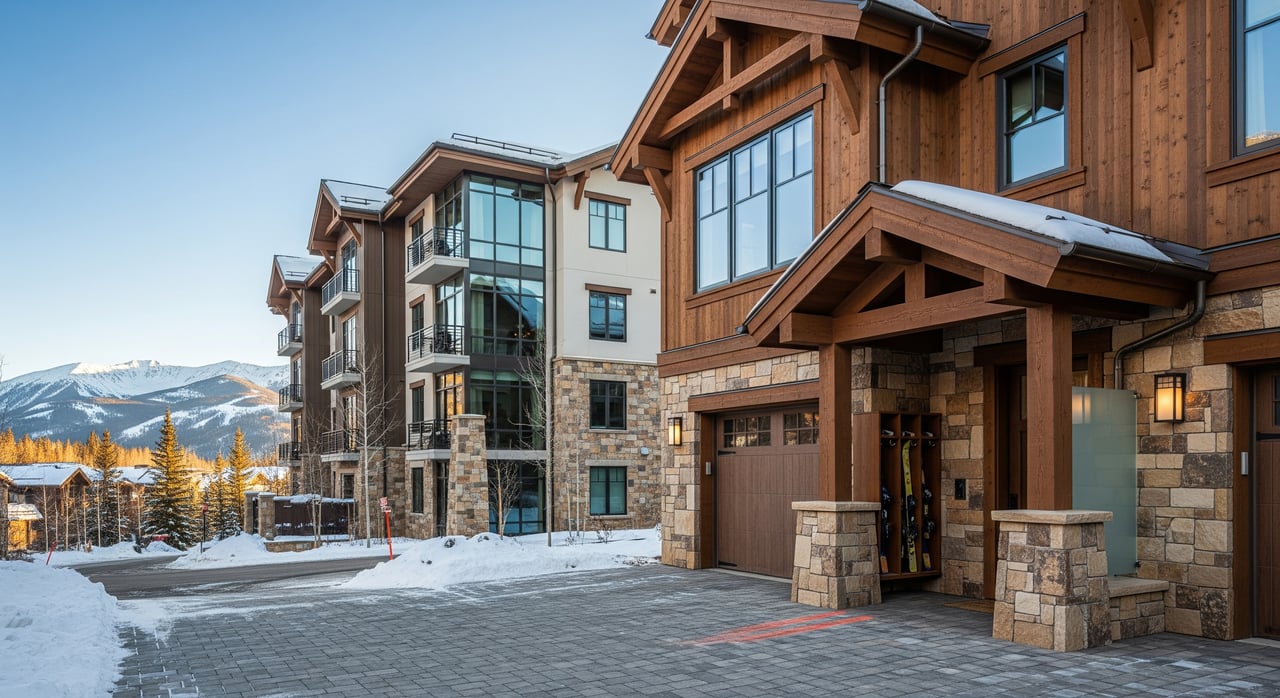
  • Condos: You often get assigned spaces, surface lots, or shared underground parking. Base‑area condos may have structured parking with limited guest capacity. Underground parking reduces winter clearing chores but can have tight availability.
  • Townhomes: Many include private garages or driveways. A garage gives you secure storage for skis and bikes, and a classic lock‑and‑leave setup. If driveway plowing is not in the HOA, you will need to arrange it.

Lift and shuttle access varies by location. Base‑area condos and homes in the Village are more likely to be walkable to the lifts or located at designated shuttle stops. Farther up or down the valley, you may rely on a shuttle or drive to the resort. Some larger associations contract private shuttles. Townhomes with garages often suit owners who prefer to drive to the base, while walkable condos favor weekenders who want to park the car and go.

When you tour, verify whether the development has a shuttle stop, the schedule, and the walk time to the lifts or nearest stop. Ask how walkways are plowed in heavy snow. Also check storage options for ski gear and bikes, including lockers or in‑garage storage.

What fits your lifestyle

Different buyer profiles tend to favor different setups.

  • Denver weekenders who want turn‑and‑go convenience often prefer base‑area condos or condo‑format townhomes. You get exterior maintenance handled, and you can walk or shuttle to the lifts. The tradeoff is smaller footprints, tighter storage, and more rules.
  • Buyers planning longer stays or full‑time use often lean toward fee‑simple townhomes with a private garage and more space. You gain a residential feel and control over your exterior, with more winter prep and maintenance on your plate.
  • Out‑of‑state buyers often value properties where the HOA handles snow removal and building systems, or where a rental program is already in place.

On price, base‑area condos usually command a premium per square foot for proximity and walkability. Townhomes farther from the base often deliver more space for the money, but you add a drive or shuttle ride and more owner tasks. Financing, insurance, and HOA assessments differ by project, and they affect your monthly carry and future resale.

Short‑term rentals and rules

If you plan to rent, you must understand both local and HOA rules. Winter Park and Grand County enforce lodging taxes and have short‑term rental registration or permitting frameworks. HOAs often regulate rental activity with minimum stay lengths, booking procedures, and guest policies. Your insurance may also need to reflect rental use.

Before you buy, confirm the municipal rules, tax registration steps, HOA rental policies, and any required management approach. Ask whether the building is set up for nightly rentals or if it is better suited to longer stays.

A practical Winter Park buyer checklist

Use this checklist to compare properties side by side.

Legal and financial

  • Confirm whether it is a condo under CCIOA or a fee‑simple townhome. Check the deed language.
  • Request the HOA declaration, bylaws, rules, recent meeting minutes, budgets and financials for the past 2 to 3 years, the current reserve study, and insurance certificates.
  • Verify the master policy and what your policy must cover. HO‑6 is typical for condos, HO‑3 for fee‑simple townhomes.
  • Ask your lender about financing availability or condo project underwriting for the specific property.

Maintenance and operating costs

  • List exactly what dues include. Note exterior maintenance, roof, snow removal details, shuttles, and any included utilities.
  • Review the history of special assessments and upcoming capital projects.
  • Clarify who clears driveways, stairs, and private walks in winter.

Access and convenience

  • Map distance and walk time to lifts, a shuttle stop, restaurants, groceries, and medical services.
  • Confirm parking type, guest capacity, and any seasonal parking rules.
  • Note gear storage options, such as ski lockers, boot storage, or garage space.

Use and rental

  • Document HOA short‑term rental policies and any local registration or permitting steps.
  • Decide if the building suits nightly or weekly rentals, or if it is better for longer occupancy.
  • Identify property management options and typical fees if you plan to rent.

Resale and liquidity

  • Consider the likely buyer pool for the product type and location.
  • Factor in walkability and resort access, which often influence resale premiums.
  • If available, review seasonal occupancy data or historical rental performance.

Safety and winter readiness

  • Understand the snow‑management plan and plowing frequency.
  • Ask about freeze protection for pipes and building systems.
  • Confirm whether access roads are county plowed or privately maintained.

Next steps

Choosing between a Winter Park condo and a townhome comes down to how you want to live and use the property. Match the ownership type, HOA scope, access, and carrying costs to your routine, then verify the details in the documents. If you want a second home that doubles as an income asset, align the legal setup and HOA rules with your rental plan before you write an offer.

When you are ready to compare live options or want a second set of eyes on HOA documents, we are here to help. Reach out to Michael Ayre Real Estate to narrow your search and move forward with confidence.
FAQs

What is the legal difference between a Winter Park condo and a townhome?

  • A condo owner holds title to the interior plus a share of common elements, while a fee‑simple townhome owner holds title to the structure and the lot, so control, insurance, and maintenance differ.

How do HOA dues typically differ for Winter Park condos versus townhomes?

  • Condo dues often fund exterior maintenance, building insurance, snow removal, and amenities, while fee‑simple townhome dues can be lower because owners handle more exterior items.

Which property type is better for Denver weekenders seeking convenience?

  • Many weekenders prefer base‑area condos or condo‑format townhomes because exterior work and snow removal are handled and lift or shuttle access is easier.

What insurance policy do I need for a Winter Park condo or townhome?

  • Condos usually need an HO‑6 policy for interior and liability, while fee‑simple townhomes usually need an HO‑3 policy that covers the home and the lot you own.

How does parking and lift access differ between condos and townhomes in Winter Park?

  • Condos often have assigned or underground parking and may be walkable to lifts, while townhomes often have private garages and are better for owners who drive to the base.

What should I check before planning short‑term rentals in Winter Park?

  • Confirm municipal registration and lodging tax rules, HOA rental policies and minimum stays, insurance requirements, and whether the building supports nightly rentals.

Work With Us

Our creative approach to personalizing each client’s experience sets us apart. Our reputation and business is founded on relationships and is proven by our extensive referral and repeat client base. From beginning to end, we give each client the time, respect and unwavering attention they deserve.