Why Your Edwards Tax Bill Depends on a Line You Can't See on the Listing
September 10, 2026
September 10, 2026
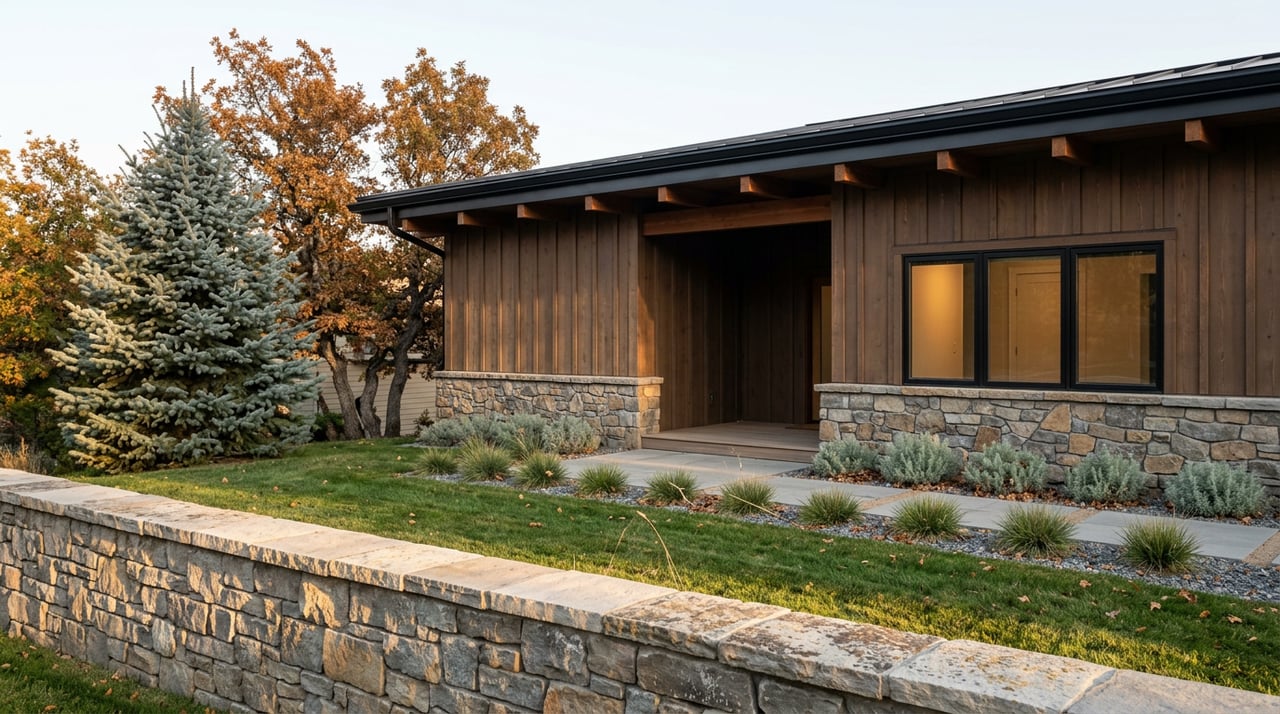
Two homes sit within a few blocks of each other in Edwards. Both have an Edwards mailing address. Both are a short walk from Riverwalk. Neither owner would tell you, just by looking at the property, that one of them pays into a local government the other doesn't touch at all.
That difference isn't about lot size, view, or finish level. It comes down to which side of an administrative boundary the parcel happens to sit on, a boundary that doesn't show up on most listing photos and rarely gets explained until closing. If you're comparing homes in Edwards right now, that line matters more than the median price you've already seen on the portals.
Edwards has never incorporated as a town. There's no mayor, no town council, no single municipal budget covering every address that shares the name. Instead, Edwards runs on a patchwork of subdivisions, and the Edwards Metropolitan District itself puts it plainly on its own site: some of those subdivisions fall inside the district, and others maintain their own separate metropolitan district entirely.
That means "Edwards" as a place and "Edwards Metropolitan District" as a taxing authority are not the same thing. Riverwalk sits at the commercial heart of the community, but the residential parcels scattered around it, along Highway 6, up into the hillside subdivisions, don't all answer to the same district. A buyer touring three homes in one afternoon could be touring three different tax jurisdictions without a single sign pointing that out.
For homes that do fall inside EMD's boundary, the district functions like a small local government. It's funded through a voter-approved mill levy on property taxes plus a 1 percent sales tax, and that money goes toward specific, nameable things rather than a generic municipal fund.
The service plan covers streets and drainage, traffic signalization including the Hillcrest roundabout, and parks and recreation delivered in partnership with Eagle County and the Mountain Recreation Metropolitan District. Fire protection runs through coordination with the Eagle River Fire Protection District, and policing runs through the Eagle County Sheriff's Office. The district also handles mosquito control and, this September, a wildfire mitigation chipping program for residents clearing defensible space around their homes.
It's not all pavement and pest control. Earlier this year, EMD hosted a free session with Skip Lisle, the beaver expert behind Beaver Deceivers International, on managing beaver activity along local waterways. There are also standing rebates: $200 for e-bikes, energy-efficiency rebates run with Walking Mountains, and water-wise efficiency rebates through Eagle River Water and Sewer District. A first newsletter is set to launch in October, which tells you the district is still building out how it communicates with the residents actually funding it.
None of that reaches a home sitting just outside the boundary. That owner isn't voting on EMD's budget, isn't eligible for its rebates, and isn't paying its mill levy or its 1 percent sales tax. They may belong to a separate metro district with a different set of priorities and a different bill, or they may rely on Eagle County directly for the services EMD provides to its own residents.
| Inside Edwards Metropolitan District | Outside EMD (separate district) | |
|---|---|---|
| How you pay | Mill levy on property tax + 1% sales tax | Whatever that district's own mill levy and structure set |
| What it funds | Roads, Hillcrest roundabout, parks with Eagle County, mosquito control, wildfire chipping | Determined by that district's own service plan |
| Rebates available | E-bike, energy efficiency, water efficiency | Not available through EMD |
| Who you vote for | EMD board, EMD ballot measures | That district's own board and measures |
This year, that boundary carries more weight than usual. Between January 14 and February 28, 2026, EMD surveyed 277 residents, with a margin of error of about 5.7 percent, ahead of a ballot measure heading to voters later this year.
The results were specific. Traffic and transportation infrastructure ranked as the dominant concern, with residents repeatedly flagging Highway 6 congestion and roundabout bottlenecks. Growth and overdevelopment showed up as a close second theme, with residents naming the West End and Gas House project directly as a source of anxiety about density outpacing infrastructure. When asked to rank budget priorities, wildfire preparedness and street improvements came out on top, well ahead of landscaping or aesthetic spending. Quality of life, notably, still scored very highly across the board. People aren't unhappy living in Edwards. They're specifically worried about the roads and the fire risk keeping pace with growth.
That survey isn't background noise. It's the data EMD is using to shape what it asks voters to fund next. If you're buying inside the district's boundary, the outcome of that vote could change what your mill levy and sales tax dollars prioritize over the next several years, more toward roundabout capacity and wildfire mitigation than anything cosmetic. If you're buying just outside that boundary, this particular vote won't touch your tax bill at all, no matter how close the address is.
Colorado's standard purchase contract already requires sellers to disclose whether a property sits within a special taxing district. In a place like Edwards, where that disclosure can mean the difference between one tax line and several, it's worth treating as more than boilerplate paperwork to sign without reading.
Before you write an offer on a home in Edwards, it's worth confirming a few things directly:
Your title company can usually confirm district status as part of the title commitment, and the statewide special district map maintained through Colorado's open data portal is a useful starting point for checking boundaries yourself, though the disclaimer on that dataset is honest about its limits. For anything closer to a final answer, a parcel-level check with the Eagle County Assessor or the district itself is worth the extra step.
Does every home in Edwards pay into a metro district? Not automatically, and not the same one. Some subdivisions fall inside EMD, others belong to their own separate metropolitan district, and the arrangement is set at the subdivision level rather than applying uniformly across the whole Edwards area.
How do I find out which district covers a specific address? Start with the title commitment your title company prepares, since special district status is typically confirmed there. You can also check the address against the Eagle County Assessor's records or the state's special district GIS data as a preliminary step.
Will this year's ballot measure change my taxes if I'm in a different district? No. A metro district's ballot measure only applies within that district's own boundary. If your home falls outside EMD, this particular vote has no direct effect on your tax bill, even if the address down the street is voting on it.
If you're weighing a purchase in Edwards and want a clear read on which side of these lines a specific property sits, that's exactly the kind of parcel-level question worth working through before you fall in love with a house. Michael Ayre has spent years tracking how Vail Valley's patchwork of districts, HOAs, and service plans actually plays out for buyers here. Schedule a personalized consultation and we'll walk the specific address with you, boundary lines included.




4 checks before you buy a mountain home

Our creative approach to personalizing each client’s experience sets us apart. Our reputation and business is founded on relationships and is proven by our extensive referral and repeat client base. From beginning to end, we give each client the time, respect and unwavering attention they deserve.

Michael Ayre
Address
292 E Meadow Dr #101
Vail, CO 81657