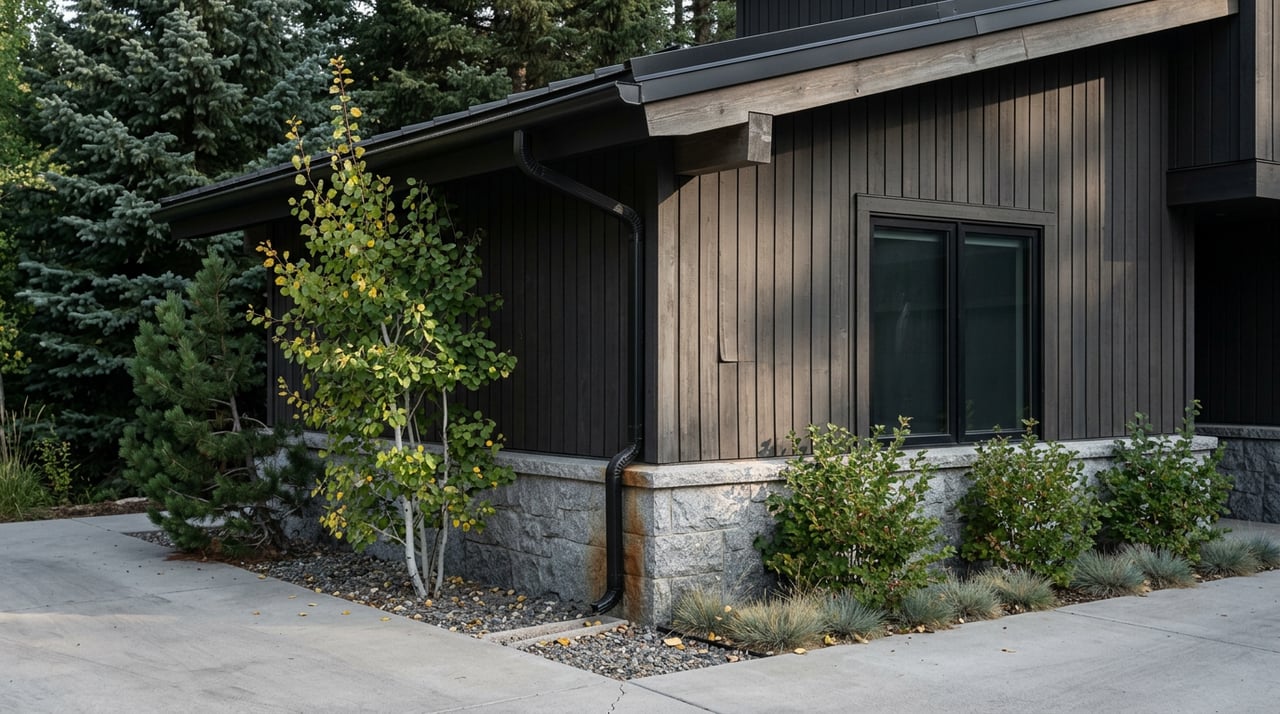
The HOA Fee Everyone Compares, and the One Number That Actually Matters in Avon
August 20, 2026
August 20, 2026
Every condo listing in Avon has a number in bold near the top: the monthly HOA fee. Buyers scan it, compare it against three other units, and move on. The building at Sunridge at Avon II had a monthly fee of $390 for a two-bedroom unit, which read as reasonable by any Vail Valley standard. Then on June 1, 2025, the association billed that same two-bedroom owner a special assessment of $2,910.08. A three-bedroom owner paying $567.23 a month got a bill for $4,232.53. The monthly dues and special assessments were separate amounts.
That distinction between the monthly fee and the total bill is the thesis of this post. In Avon's condo-heavy market, the monthly HOA number tells you only part of what a unit will really cost you to own. What tells you something is the health of the reserve fund behind that fee, the insurance the association is carrying, and what the declaration says about who pays when the money runs short. Two condos with nearly identical dues can be sitting on completely different financial ground.
Sunridge at Avon II is a useful example precisely because its numbers are public. The association's declarations were recorded back in October 1980, which means the building predates almost every reform Colorado has passed on reserve planning. Here's how the fee and the assessment compared for owners there in 2025:
| Monthly HOA Dues | June 2025 Special Assessment | |
|---|---|---|
| 2-Bedroom | $390.00 | $2,910.08 |
| 3-Bedroom | $567.23 | $4,232.53 |
That assessment amounts to roughly seven to eight months of regular dues collected in a single lump sum. A buyer comparing Sunridge to another Avon building purely on the $390 line item would need to account for the separate assessment.
Fees vary in Avon for reasons that have nothing to do with how well-run a building is. Some Avon condo listings carry dues around $390 a month, while comparable units up the road in Beaver Creek Village run anywhere from roughly $1,200 to over $3,400 a month. That spread doesn't mean every Beaver Creek building is mismanaged and every Avon building is a bargain. It usually means the higher-fee buildings are bundling in staffing, concierge services, and amenity maintenance that a leaner building doesn't carry at all.
The Seasons at Avon illustrates the same problem inside a single building. Its monthly fees range from about $422 to $1,285, and that range exists because the association's fee structure folds in common area maintenance, gas, insurance, management, sewer, snow removal, trash, and water. A fee that wide isn't a red flag by itself, but it means the number on any single listing is only telling you about that one unit's share of a much larger, more variable budget.
The Lodge at 100 W. Beaver Creek Blvd is a different animal again. Its dues include high-speed internet and premium cable, and the building runs a front desk, an elevator, laundry facilities on each floor, an on-site wine and spirits shop, and a full-service ski and bike rental operation. That fee is paying for staffed services, not just a reserve account.
Then there's Beaver Creek West Condominiums, a 124-unit property established in 1983 and self-managed by its own nonprofit corporation rather than an outside management company. Self-management isn't inherently risky, plenty of well-run Colorado associations handle their own books, but it does mean the reserve planning and insurance shopping rest entirely with a volunteer board rather than a professional manager whose job depends on getting it right.
None of these buildings can be ranked by fee alone. Comparing them also means considering the services, reserve funding, insurance, and other costs associated with each building.
The Sunridge assessment didn't happen in a vacuum. A state-commissioned actuarial review, as reported by KRDO, described Colorado's HOA insurance market as undergoing significant upheaval, with premiums for association master policies more than doubling in some areas. The driver isn't wildfire, which is what most buyers assume. It's hail. Colorado sits in a corridor that produces some of the most frequent and severe hailstorms in the country, and roof and exterior claims from those storms have pushed master policy premiums and deductibles up across the state, mountain buildings included.
When a master policy premium jumps or a deductible grows, the association has three choices: raise regular dues, cut services, or levy a special assessment to cover the gap. A board sitting on a thin reserve has fewer good options than a board that planned ahead. This mechanism can make total ownership costs exceed regular dues at Colorado condo and townhome associations, not just at Sunridge.
Colorado's baseline rule under the Common Interest Ownership Act has long been narrower than most buyers assume. Associations aren't required to commission a reserve study on a fixed schedule. What they're required to do is adopt a written policy stating whether they conduct studies, how often, and whether a funding plan backs up the recommendations. A board can technically comply with a policy that says "we don't do reserve studies" as long as it's written down and adopted.
Earlier reform, under Colorado's HB 22-1387, did require declarants to hand incoming associations a reserve study and matching reserve funds at the moment a developer turns a new community over to its owners. This April, Colorado tightened that further. According to Reserve Advisors' Colorado reserve-study requirements guide, the new law requires the reserve study delivered at that handoff to be professionally prepared and to project costs over a full thirty-year horizon, completed and delivered before control actually transfers to the association's board. It closes a gap where a hastily assembled or internally drafted study could have technically satisfied the older rule.
That protection is forward-looking. It helps buyers in newly built or newly transitioning communities. It does nothing for a building like Sunridge, recorded in 1980, or Beaver Creek West, established in 1983. For those associations, the only real safeguard is whatever reserve discipline the current board has chosen to practice voluntarily, which is exactly why asking to see it matters more in an older Avon building than a newer one.
Buyers who do their homework often add an HO-6 policy with loss assessment coverage, reasoning correctly that it should absorb a shock like the one Sunridge owners faced. A March 2026 investigation from KRDO in Colorado Springs found a wrinkle in that logic. Some insurers have started inserting a "special limit" clause into HO-6 policies that caps how much the policy will actually pay toward an assessment triggered by the HOA's own master policy deductible, in some documented cases as low as $2,000, regardless of the higher loss assessment limit the homeowner thought they'd purchased. Colorado's insurance regulators have received over 200 complaints tied to this exact gap since 2019 and are reportedly working to close it, but until that happens, the coverage a buyer assumes they have and the coverage they'd actually collect can be two very different numbers.
None of this is legal advice, and any declaration language that raises a real question deserves a conversation with a Colorado real estate attorney before you go under contract. But there's a concrete list worth working through on any Avon condo before you make an offer:
Our buyer closing checklist walks through the broader document list for any Vail Valley purchase, and it's worth reviewing alongside this one before you get deep into the home buying process on a specific building.
Does a low HOA fee mean the association is healthy? Not on its own. A low fee can mean a lean, well-run budget, or it can mean a board that's deferred maintenance and is about to catch up all at once through a special assessment. The fee tells you what you're paying monthly. It doesn't tell you what's been left unfunded.
Is a self-managed HOA automatically a problem? No. Some self-managed associations, like Beaver Creek West, have run for decades without professional management. It does mean the reserve planning and insurance shopping depend entirely on volunteer board members, so it's worth asking how often the board reviews its budget and whether it has ever brought in outside help for a reserve study.
For associations outside the developer-handoff requirement, is a reserve study required? For an association not subject to the developer-handoff requirement that has never commissioned a reserve study, PropFusion's Colorado reserve study requirements guide says there's currently no state requirement forcing it to do so, which is exactly why asking the question directly matters.
If you're comparing Avon condos and want someone to pull the actual reserve documents and insurance details on a specific building before you write an offer, that's the kind of groundwork Michael Ayre does as a matter of course. Schedule a personalized consultation and we'll walk through the numbers behind the number together.




Our creative approach to personalizing each client’s experience sets us apart. Our reputation and business is founded on relationships and is proven by our extensive referral and repeat client base. From beginning to end, we give each client the time, respect and unwavering attention they deserve.

Michael Ayre
Address
292 E Meadow Dr #101
Vail, CO 81657