Attribute | Homestead Detail |
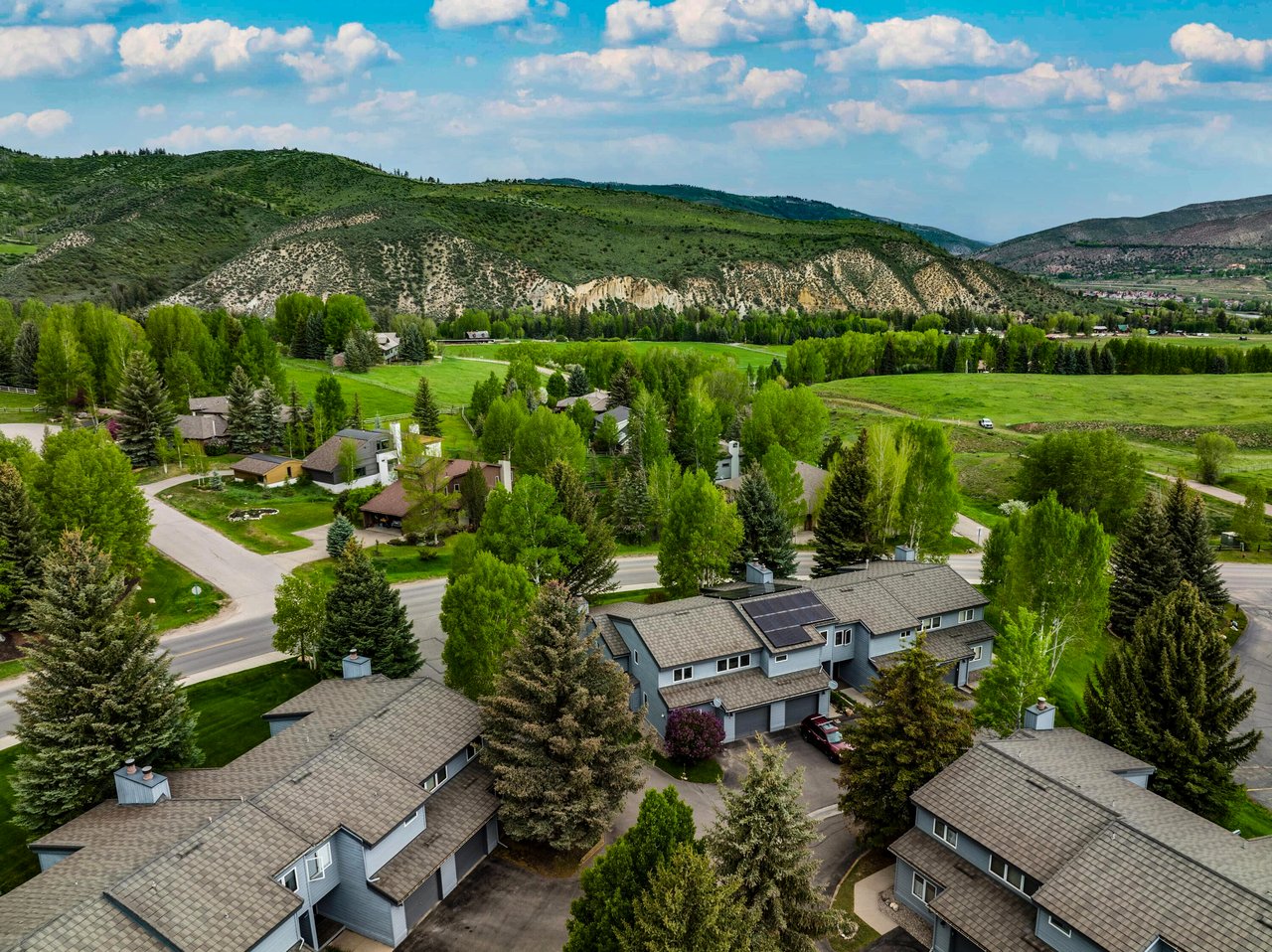
Location | Hillside residential community in Edwards, south of Highway 6 |
Character | Established, family-oriented neighborhood with parks and trail access |
Housing Mix | Single-family homes, duplexes, townhomes |
Notable Features | Homestead Court Club, hiking trails, neighborhood parks |
Vibe | Primarily full-time residents with strong community feel |
Sun Exposure | Generally strong due to hillside orientation |
STR Environment | Typically restricted; varies by HOA |
Primary Access | Minutes to Highway 6 and I-70 (Edwards exit) |
“In Homestead, buyers should focus on orientation, garage space, and proximity to parks. Homes near open space or with strong south-facing exposure tend to hold value well. This is a neighborhood built for long-term ownership rather than short-term rental strategy.”— Michael Ayre
40 Buyer & Seller Questions — Answered by Michael Ayre
Michael's view is that Homestead can be a compelling long-term ownership opportunity because it combines a strong year-round residential setting, central Edwards location, recreation, mountain views, and convenient access to Beaver Creek and the broader Vail Valley. Long-term performance still depends on the exact property, including location within Homestead, condition, views, sun exposure, floor plan, HOA obligations, and resale positioning.
That depends on your priorities. Homestead appeals to buyers who want an established residential neighborhood with recreation and relatively convenient access to Edwards. Buyers prioritizing walkability may prefer Riverwalk, while buyers seeking golf may consider Singletree and those wanting larger acreage or greater privacy may look toward Lake Creek.
There is no single threshold because Homestead includes different property types, sizes, ages, locations, and remodel levels. The better question is whether the property delivers the space, condition, neighborhood setting, and long-term utility appropriate for your budget.
Homestead is not a ski-in/ski-out community, and many properties require driving for shopping, dining, and skiing. Buyers should also understand HOA obligations and carefully evaluate winter access, sun exposure, parking, and maintenance. In exchange, Homestead provides a strong neighborhood environment in a central Vail Valley location.
Yes, particularly for buyers who want a residential Vail Valley experience rather than a resort-village setting. Second-home owners should consider property management, snow removal, insurance, heating, storage, and whether the specific home or association is well suited to lock-and-leave ownership.
Yes. Homestead is especially attractive to full-time residents because of its central location, neighborhood character, recreation, and proximity to Edwards schools, restaurants, shopping, healthcare, and services.
Views, sun exposure, privacy, lot position, condition, floor plan, garage capacity, outdoor living, and proximity to community amenities can all materially affect desirability. Michael evaluates each property individually because even homes on nearby streets can offer very different ownership experiences.
Yes. Elevation, orientation, views, traffic exposure, driveway configuration, winter sun, and proximity to recreation can vary. Buyers should evaluate the specific street and property rather than assuming every Homestead location carries the same value.
Both are established Edwards-area residential communities. Singletree has a strong golf-oriented identity and different terrain and views, while Homestead offers its own recreation-focused neighborhood character. Buyers should compare home type, HOA costs, amenities, sun, views, and proximity to their daily activities.
Riverwalk and central Edwards provide greater walkability to restaurants, shops, and services. Homestead offers a more traditional residential neighborhood environment with more separation from commercial activity. The decision often comes down to walkability versus residential setting.
Both can appeal to year-round residents seeking convenient access to Beaver Creek and central Eagle County. EagleVail offers golf and a location between Avon and Edwards, while Homestead is closely tied to Edwards. Property type, price, amenities, HOA obligations, and commute should drive the comparison.
Budget beyond principal and interest. Include property taxes, homeowners insurance, HOA dues, utilities, snow removal, landscaping where applicable, maintenance, and reserves for future repairs or replacements.
HOA obligations can vary depending on the specific property and association. Buyers should determine what dues cover, whether there are multiple association obligations, and how reserves and future capital projects are handled. Michael reviews current governing documents, budgets, assessments, and insurance as part of due diligence.
Homestead properties are assessed within Eagle County, with individual tax bills reflecting assessed value and applicable taxing districts. Buyers should review the actual current tax information for the specific property rather than relying on a generic percentage.
There may be association transfer charges or other property-specific costs depending on the transaction and current governing documents. Michael reviews these before purchase so buyers understand the complete acquisition and carrying costs.
That depends on property type, age, and HOA responsibility. A townhome may shift certain exterior expenses to an association, while a single-family home places more responsibility directly on the owner. Roofs, windows, decks, heating systems, exterior finishes, and driveways should all be considered.
Homestead offers a residential, recreation-oriented mountain lifestyle. It feels distinctly different from Vail or Beaver Creek because the community is centered more on year-round living than tourism, while still providing convenient access to the resorts.
Homestead is known for community recreation, but buyers should verify the current amenities, access requirements, fees, and rules associated with the specific property. Amenities and operating arrangements can evolve, so current information matters.
It can be especially appealing to families because of its residential character, recreation, and proximity to Edwards-area schools and services. Buyers should verify current school assignments and transportation for the exact address.
Yes. Homestead's location provides access to neighborhood recreation and the broader Edwards trail and outdoor network. Hiking, biking, skiing, fishing, and other mountain activities are readily accessible throughout the surrounding Vail Valley.
Walkability varies considerably by location. The neighborhood itself offers opportunities for walking and recreation, but most residents will still use a vehicle for many trips to restaurants, shopping, skiing, and other services.
Homestead is well positioned for access to Beaver Creek and provides reasonable driving access to Vail. It is not a ski-in/ski-out neighborhood, so buyers who ski frequently should consider the drive from the exact property and winter traffic patterns.
That depends on budget, space requirements, privacy, and maintenance preferences. Attached properties can offer easier ownership and potentially lower acquisition costs, while single-family homes generally provide more privacy, outdoor space, storage, and control.
Turnkey properties can command a premium because renovations in the Vail Valley can be expensive and time-consuming. Older homes may offer opportunity when the purchase price properly reflects the work required. Michael helps buyers compare renovation costs with the premium for a finished home.
Very important. Buyers tend to value open living spaces, practical bedroom arrangements, home offices, mudrooms, storage, garage connectivity, and good indoor-outdoor flow. Functional floor plans can materially affect resale.
Very important. Garages and storage for skis, bikes, tools, and recreational equipment are valuable in a mountain community. Buyers of attached properties should also understand guest parking, assigned parking, and any restrictions on vehicles or equipment.
Beyond a standard home inspection, buyers should review roofs, windows, drainage, foundations, decks, heating systems, fireplaces, exterior materials, and signs of moisture or ice-damming. For attached properties, HOA financials, insurance, reserves, assessments, and maintenance responsibilities are also critical.
Competition depends on property type, price, condition, and available inventory. Well-maintained or remodeled homes with good views, sun, functional layouts, and garages can attract meaningful interest because Homestead appeals to both local and second-home buyers.
There is no single useful average because condos, townhomes, duplexes, and single-family homes behave differently. Michael uses the closest Homestead comparables by property type, location, condition, and size rather than broad Edwards statistics.
Both reveal important information. Winter shows sun exposure, snow accumulation, driveway access, heating performance, and commute realities. Summer makes outdoor spaces, landscaping, trails, decks, views, and exterior condition easier to evaluate.
Do not rely solely on price per square foot. Michael evaluates property type, exact location, views, sun exposure, condition, remodel quality, floor plan, garage capacity, HOA obligations, and competing Edwards properties before determining whether a premium is justified.
Potentially, if the property and intended use qualify under current tax rules. Buyers considering a 1031 exchange should involve a qualified intermediary and tax advisor early because identification and closing deadlines are strict.
Most properties can potentially use conventional, jumbo, or other residential financing depending on the home and borrower. Attached properties may require additional review of HOA finances, insurance, owner occupancy, litigation, or other lender requirements.
Rental eligibility should be verified for the exact property under current local regulations, HOA documents, and any deed restrictions. Buyers should not assume that rental rules are identical throughout Homestead or Edwards.
It can work for certain investors, particularly where year-round or longer-term rental demand is the strategy. Michael generally evaluates Homestead as a residential market first rather than assuming resort-style vacation-rental economics. Rent, vacancy, management, HOA costs, and restrictions should be modeled realistically.
That depends on property type, condition, location, competing inventory, and seller goals. Homestead benefits from central-valley demand and a strong year-round residential identity, but buyers remain sensitive to price, condition, HOA costs, and monthly payments.
Common mistakes include pricing from Beaver Creek or Vail resort sales, failing to distinguish between different Homestead property types, underestimating the impact of dated interiors, and not addressing deferred maintenance before going to market.
Marketing should emphasize the features buyers value most: neighborhood setting, views, sun, recreation, floor plan, garage and storage, outdoor spaces, proximity to Edwards, and access to Beaver Creek and Vail. Professional photography, floor plans, and neighborhood context can be particularly effective.
Depending on the transaction, the team may include a local lender, inspector, title company, insurance advisor, contractor, property manager, tax advisor, attorney, or 1031 intermediary. For attached properties, professionals experienced with HOA documents and insurance can be particularly valuable.
Choose a broker who understands Homestead at the neighborhood and property level rather than treating it as generic Edwards inventory. The agent should be able to discuss property-type differences, views, sun exposure, HOA structures, recreation, remodel potential, parking, rental considerations, and how Homestead compares with Singletree, Riverwalk, EagleVail, Cordillera Valley Club, Lake Creek, Avon, and other central Vail Valley alternatives. Michael Ayre brings more than 21 years of full-time Vail Valley and Eagle County real estate experience to that property-by-property analysis.
1,820 people live in Homestead, where the median age is 47 and the average individual income is $75,429. Data provided by the U.S. Census Bureau.
Total Population
Median Age
Population Density Population Density This is the number of people per square mile in a neighborhood.
Average individual Income
There's plenty to do around Homestead, including shopping, dining, nightlife, parks, and more. Data provided by Walk Score and Yelp.
Explore popular things to do in the area, including Burger Sear, Smiling Moose Rocky Mountain Deli, and Craftsman Brew.
| Name | Category | Distance | Reviews |
Ratings by
Yelp
|
|---|---|---|---|---|
| Dining | 0.27 miles | 0 reviews | 0/5 stars | |
| Dining · $ | 0.27 miles | 140 reviews | 3.8/5 stars | |
| Dining · $$ | 0.27 miles | 311 reviews | 4.2/5 stars | |
| Dining | 0.29 miles | 25 reviews | 3.5/5 stars | |
| Dining · $$$ | 0.29 miles | 27 reviews | 4.6/5 stars | |
| Dining · $$ | 0.29 miles | 129 reviews | 4.1/5 stars | |
| Dining | 0.3 miles | 29 reviews | 4.3/5 stars | |
| Dining | 0.32 miles | 1 review | 3/5 stars | |
| Dining · $$ | 0.32 miles | 1 review | 5/5 stars | |
| Shopping | 0.29 miles | 4 reviews | 5/5 stars | |
| Shopping | 0.3 miles | 0 reviews | 0/5 stars | |
| Active | 0.14 miles | 0 reviews | 0/5 stars | |
| Active | 0.19 miles | 0 reviews | 0/5 stars | |
| Active | 0.21 miles | 0 reviews | 0/5 stars | |
| Active | 0.21 miles | 1 review | 5/5 stars | |
| Active | 0.25 miles | 1 review | 5/5 stars | |
| Active | 0.28 miles | 0 reviews | 0/5 stars | |
| Beauty | 0.27 miles | 40 reviews | 2.3/5 stars | |
| Beauty | 0.28 miles | 32 reviews | 3.4/5 stars | |
| Beauty | 0.31 miles | 11 reviews | 2.1/5 stars | |
| Beauty | 0.31 miles | 0 reviews | 0/5 stars | |
| Beauty | 0.31 miles | 0 reviews | 0/5 stars | |
| Beauty | 0.31 miles | 41 reviews | 3.6/5 stars | |
| Beauty | 0.31 miles | 2 reviews | 3/5 stars | |
|
|
||||
|
|
||||
|
|
||||
|
|
||||
|
|
||||
|
|
Homestead has 635 households, with an average household size of 3. Data provided by the U.S. Census Bureau. Here’s what the people living in Homestead do for work — and how long it takes them to get there. Data provided by the U.S. Census Bureau. 1,820 people call Homestead home. The population density is 1,491 and the largest age group is Data provided by the U.S. Census Bureau.
Total Population
Population Density Population Density This is the number of people per square mile in a neighborhood.
Median Age
Men vs Women
Population by Age Group
0-9 Years
10-17 Years
18-24 Years
25-64 Years
65-74 Years
75+ Years
Education Level
Total Households
Average Household Size
Average individual Income
Households with Children
With Children:
Without Children:
Marital Status
Blue vs White Collar Workers
Blue Collar:
White Collar:
Our creative approach to personalizing each client’s experience sets us apart. Our reputation and business is founded on relationships and is proven by our extensive referral and repeat client base. From beginning to end, we give each client the time, respect and unwavering attention they deserve.
Michael Ayre
Address
292 E Meadow Dr #101
Vail, CO 81657